


Entrepreneurship without fear does not exist – but the right reaction does




Fear is one of the most faithful companions of entrepreneurship, and I encounter it every day with all the entrepreneurs I work with as a mentor. It is the fear of failure, of the market's reaction, or of how others will view us. It is important to realize that fear never really disappears completely. But we can learn to control it.

Why is fear completely normal?
Many people who enter entrepreneurship come from families where entrepreneurship was not present. They did not have entrepreneurial role models, experiences or a way of thinking that would have prepared them for how to deal with risks, uncertainty and independent decisions. In addition, the school system in our country rarely encourages entrepreneurship - that is, the ability to recognize opportunities, take initiative and exploit them.
So it's no wonder that when we think about selling, pricing, negotiating... we are overwhelmed with fear. Fear is a natural reaction when we step into unknown territory - and entrepreneurship is exactly that. That's why it's all the more difficult for me when I meet people with incredible potential who, due to all sorts of fears, don't dare to embark on their entrepreneurial path and realize their dreams.
When fear becomes an obstacle
Fear often manifests itself in the following forms in entrepreneurship:
- Perfectionism and procrastination: for example, we spend three weeks correcting the text on the website and the logo instead of calling 10 potential customers. And that's why the product never goes to market.
- Fear of selling: what if they say "no" to me.
- Fear of what others think: what if I fail and they say "we knew it".
Such fears quickly stop us. Not because we don't know how, but because we don't dare to move. They destroy creativity, reduce courage and prevent us from being penetrating, proactive and confident. To go to the market, among customers. Where we can get truly useful feedback.
Fear as an ally, not an enemy
But make no mistake – fear in itself is not bad. It is completely normal to be afraid of new challenges. To a certain extent, it even keeps us alert, thoughtful, focused and receptive to learning. It is important to recognize and channel fear. Instead of stopping us, let it encourage us – to learn more, to explore, to improve our ideas and, above all, to take action. Then fear becomes a motivation, not an obstacle.
And yes – the first sign of fear is often procrastination. Then we set ourselves one small step or task that puts us in touch with the market - one call from a potential buyer, one offer, one announcement. It is precisely taking a concrete step into the discomfort zone that reduces fear.
When the environment helps – the role of business incubators
An important step in overcoming fears is to realize that we are not alone in entrepreneurship. This is precisely why supportive environments such as business incubators exist. They provide a safe, encouraging environment where we can share our ideas and experiences without fear of ridicule, judgment, or rejection.
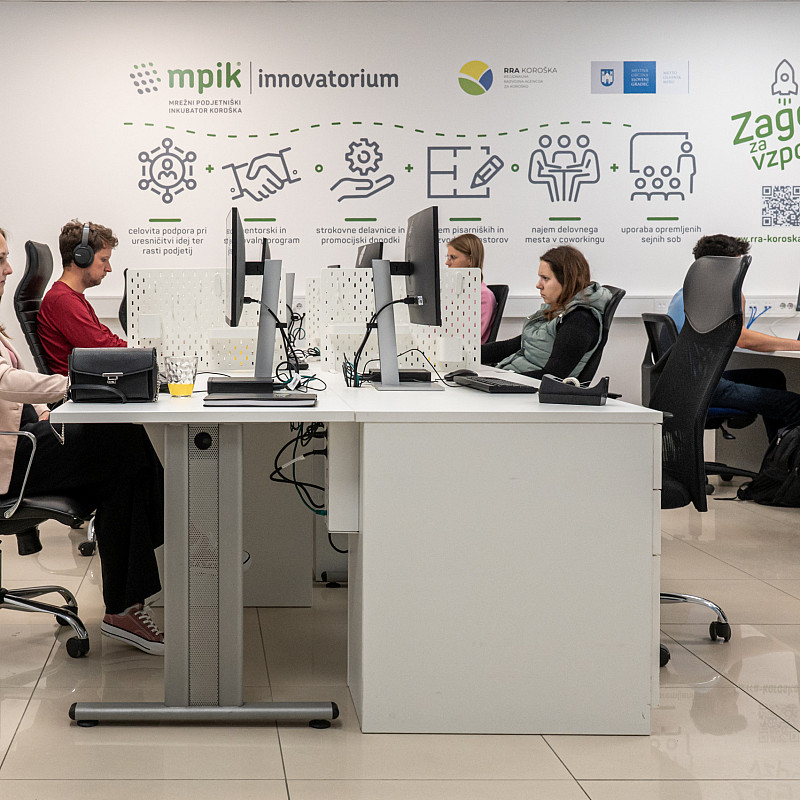
The online business incubator Koroška (MPIK) works with this very purpose – to provide entrepreneurial individuals and teams with a safe space to grow and develop. Since fears in entrepreneurship never completely disappear, our goal is to help you recognize, manage and live with them. In other words – together we try to get to the point where fear no longer drives us, but we drive it.
We at MPIK, which operates within RRA Koroška, are happy to assist you with your ideas and business plans. Among other things, we offer a free mentoring and consulting program. More information can be found at www.rra-koroska.si/mpik.
Avtor: Jure Knez, RRA Koroška d.o.o. – Mrežni podjetniški inkubator Koroška
Sorodne objave






Koroška e-news in your inbox!