


How and where to look for good business ideas?
In practice, the lack of ideas is not the biggest challenge. Ideas arise for almost everyone, and often, which I also observe in my daily work with entrepreneurs and potential entrepreneurs. The question is when an idea is also a business idea. And what are the situations from which good business ideas most often arise. This will be discussed in the rest of the article.

When can an idea even be called a business idea?
We cannot automatically equate an idea with a business idea. For an idea to have real business potential, it must meet several conditions:
- solves a specific problem or pain point in the market;
- the potential market and number of customers is large enough;
- is feasible in practice and
- is at least somewhat innovative. Or to put it another way – the idea or the way it is implemented is different from the competition.
Hobbies, problems, improvements and transfer of good practices as sources of ideas
It is a very good basis if we start from our own hobbies, interests, knowledge and experience when looking for a business idea. Simply because in this case we will do things with passion and energy, which are essential for success in entrepreneurship. This does not come by itself, but is the result of long hours of work, perseverance and risky decisions.
One such example is Lego – today a global brand, but one that was born (also) from the passion of one man. Ole Kirk Christiansen made wooden toys in his workshop in Denmark in the 1930s. His desire to offer children high-quality and creative toys grew into the LEGO company, which is still based on the founder’s initial passion today.
Passion, knowledge and experience are the foundation on which we can build. Now let's take a closer look at 3 situations from which business ideas often emerge.
Problems from everyday life. Many business ideas arise from concrete problems that an individual notices in their environment. If something is bothering you, there is a high probability that the same problem is bothering others.
A well-known example is Airbnb. Founders Brian Chesky and Joe Gebbia noticed a shortage of hotel capacity in 2007 during a major conference in San Francisco. They offered guests a place to stay on inflatable mattresses in their apartment, along with breakfast. The idea of renting out space was not new, but the breakthrough came with a simple online platform that connected hosts and guests in one place and built trust with ratings, profiles, and a good user experience.
Improvements to existing solutions. So we think about how we can simplify something, make it more efficient, make it cheaper, etc.
An example is Velcro – the so-called “hedgehog”. It was invented by Swiss engineer George de Mestral, who, while walking, noticed how burdocks (small, round fruits of some plants) cling to clothes and dog hair. Under a microscope, he saw small “hooks” and developed the Velcro system based on this. He thus replaced the classic fastening methods with a simpler and faster solution.
Transferring good practices from abroad. There is no need to reinvent everything – sometimes it is enough to look across the border and find solutions that work elsewhere but do not yet exist here. Of course, adaptation to our environment and needs is necessary.
Such are self-service vending machines for fresh local products such as milk, cheese, eggs, etc., which first became established in Austria and southwestern Germany. There, farmers sold milk, eggs, and cheese directly, without traders. Slovenian entrepreneurs and farmers successfully transferred the idea to the domestic environment, adapted it to the habits of customers, and offered easy access to quality local foods.
The idea itself isn't worth much.
A simple but true fact: no matter how great an idea is, it has no intrinsic value if there is no individual or team behind it who is capable of realizing it. Realization requires knowledge, experience, passion, perseverance, a network of connections and a willingness to take risks. And above all, entrepreneurship – this is the ability to recognize an opportunity, actively exploit it and create value from it. The combination of all of the above ultimately leads to the realization of the idea in practice.
It is precisely because of all of the above that seemingly mediocre ideas can succeed if the right team is behind them. And vice versa – even the best ideas have almost no chance of success without the right people.
Support in developing ideas
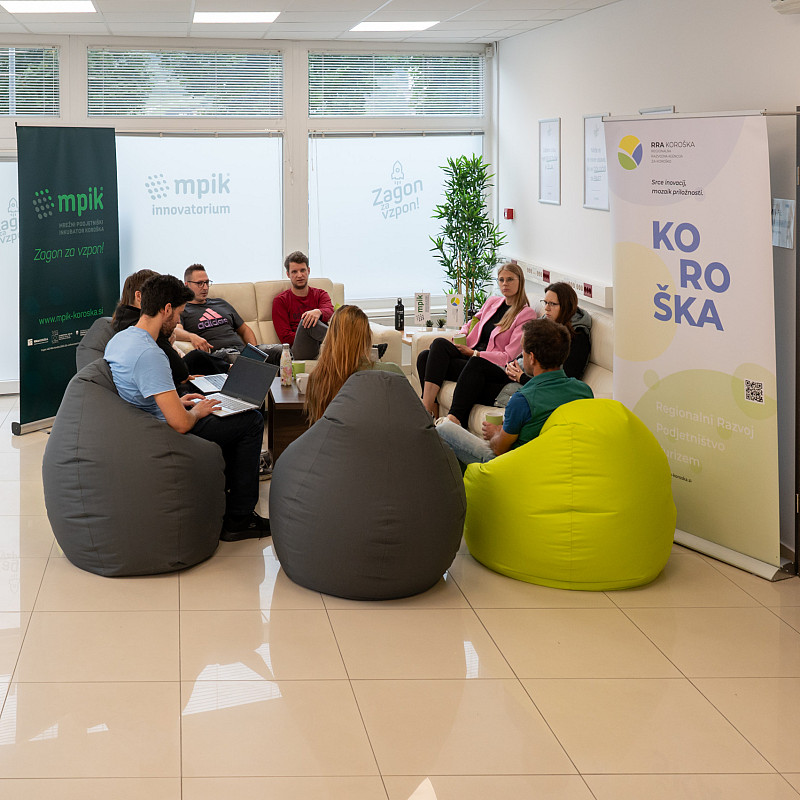
Regardless of whether you want to test your business idea or develop an existing business, we invite you to contact RRA Koroška or MPIK. As part of our consulting and mentoring programs, we can help you develop a concept, assess feasibility, and plan further steps towards the realization and growth of your business idea. More at www.rra-koroska.si/mpik .
Avtor: Jure Knez, RRA Koroška d.o.o. – Mrežni podjetniški inkubator Koroška
Sorodne objave










Koroška e-news in your inbox!