


Industry 4.0 starts with the problem, not the technology




When we talk about Industry 4.0, we quickly enter the world of automation, digitalization, sensors, artificial intelligence, data and connected machines. All of these are important elements of modern production. Today, we are already talking about Industry 5.0 and many other concepts, but we will not go into which label is right. However, when working with companies, something else is confirmed again and again: the biggest challenge is often not the question of which technology to use, but first of all to figure out what we want to solve with it. And do we have a team that is capable and, above all, willing to use it in practice.
This was also very clearly demonstrated in this year's MPIKov AS program, which we dedicated to the practical introduction of Industry 4.0 within the framework of the Koroška Network Business Incubator.
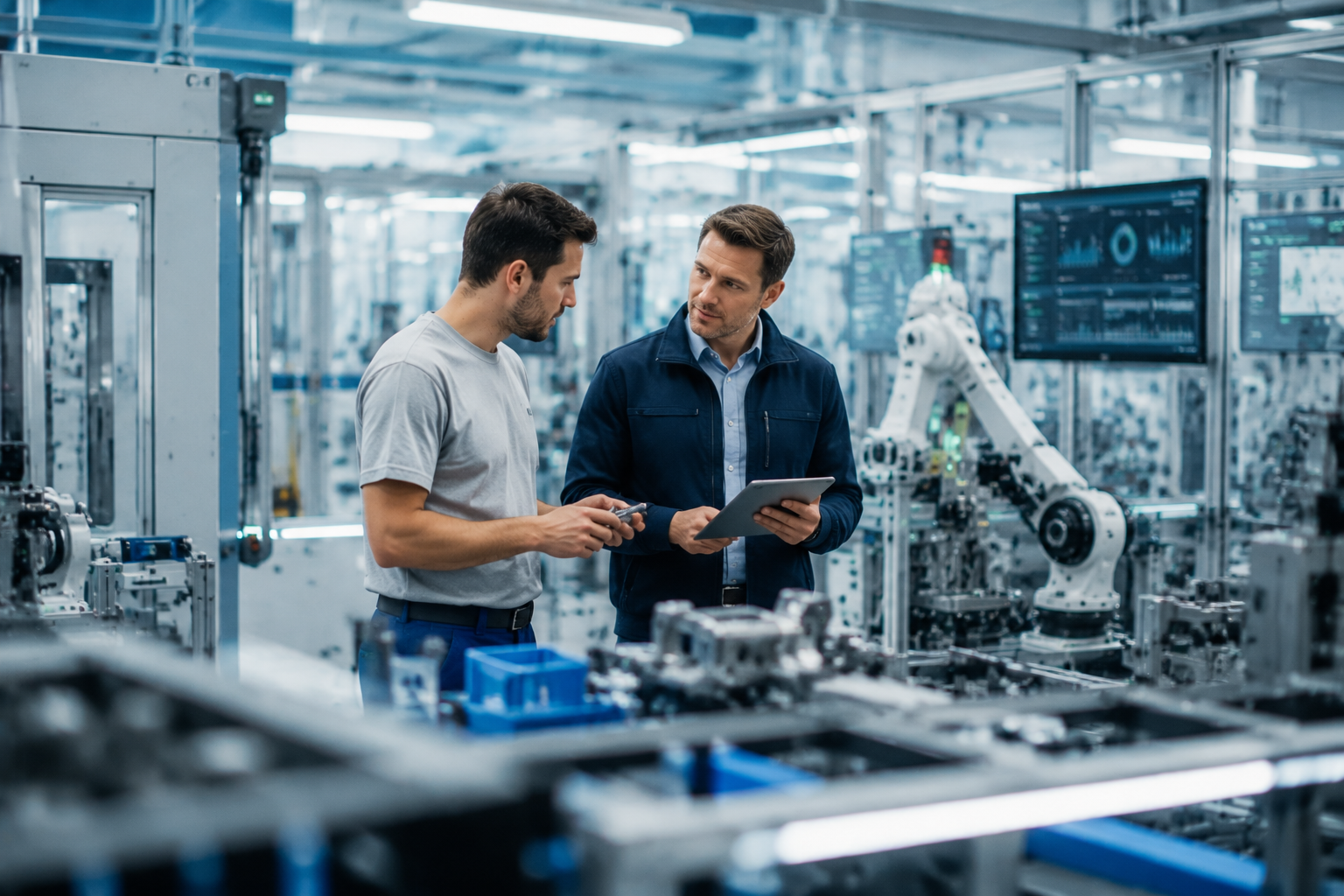
Different companies, different challenges, similar issues
Very different companies participated in the three workshops – from startups to established small, medium and large manufacturing companies. We heard very different challenges. In one of the companies, employees resisted the introduction of a new ERP system. One of the reasons was the fear of losing control – an individual who was used to having key information with him or her and having problems solved through him or her had a hard time coming to terms with a more transparent system. In the other company, the situation was almost the opposite: employees had already recognized the need for changes and wanted them, but decision-making was slow or management did not pay enough attention to these issues. Startup companies, however, often face a completely different limitation – there is no shortage of ideas and willingness, but there is a shortage of money and staff.
At first glance, these are quite different worlds. However, no matter how you look at it, you come across similar questions: How to increase productivity and stay competitive? Where are the bottlenecks? What is worth automating? How to make better use of data?
Industry 4.0 can therefore also be interesting for companies that do not yet see themselves as “digital.” The first step does not have to be a large project. Sometimes, one specific problem that takes up time, causes errors, or limits growth is enough.
First understand the problem, then look for a solution
When implementing new technologies, it often happens that we first see an interesting solution and only then ask ourselves where to put it. This way, a company starts thinking about artificial intelligence, automation or a new information system before it understands its processes well enough. If we don’t know where the problems are, what data is available to us and how we will measure improvement, we can end up with a rather expensive solution to a problem that we didn’t really have.
So one of the first steps is simple: let's look at how the process actually works today. Where are we wasting time? Where are errors or bottlenecks occurring? What data do we have available and what information are we missing when making decisions? And most importantly – what would be different for the company if we successfully solved this problem?
Only then does the question of technology come up.
Even the best technology needs people
New technology does not bring results on its own. If people in the company do not understand, accept, or support the changes, even a good solution will have difficulty taking hold. That is why when introducing technology, both people who know production and those who know the technology are important.
This was also evident in our workshops. Participants not only received an explanation of individual technologies, but were also able to see concrete examples of how automation, data capture, system integration, and analytics can be approached in practice.
Industry 4.0 is not a project, but a way of thinking
Industry 4.0 is therefore not one big project that a company implements and completes. It is primarily a way of thinking about how we can do our work better. The starting point is therefore not necessarily a robot, a sensor or artificial intelligence, but a simple question: "What is hindering us the most today and how could we do it better?"
Connecting companies, experts, organizations and knowledge is one of the purposes of MPIK. If you know that a process in your company could be automated, digitalized or simply made better, but you don't know where to start, contact us. You don't need to already know the solution - it's enough to know the problem. In MPIK, which operates within RRA Koroška, we can help you find knowledge, experts and the next meaningful step. You can find more information at www.rra-koroska.si/mpik .
Avtor: Jure Knez, RRA Koroška d.o.o. – Mrežni podjetniški inkubator Koroška
Sorodne objave










Koroška e-news in your inbox!